 FOODPOWER
COLLECTIONS
Archaeological Collections in Peru
FOODPOWER draws on archaeological collections from Peru to investigate changing foodways, diet, inequality, and power in the ancient Andes. These collections provide the archaeological contexts, materials, and samples that form the foundation for laboratory research.
01 · ARCHAEOLOGICAL CONTEXTS
Understanding food within its archaeological context
Archaeological contexts provide the foundation for investigating past foodways. FOODPOWER draws on archaeological collections from seven sites in Peru: Pucara, Palermo, San Bartolomé–Wiskachuni, Camata, Taraco, Wilamaya Patjxa, and Kaillachuro. Together, these collections span approximately 5,000 to 1,000 years ago, from the Terminal Archaic period through the Tiwanaku period, providing a broad chronological perspective on changing foodways in the ancient Andes.
The collections include materials from settlements, domestic spaces, burials, activity areas, and other archaeological contexts in which food, animals, plants, vessels, and human remains are preserved. Understanding where these materials were recovered and how they were associated is essential for interpreting the evidence generated through laboratory analysis.
02 · PERUVIAN MUSEUM COLLECTIONS
Researching archaeological collections
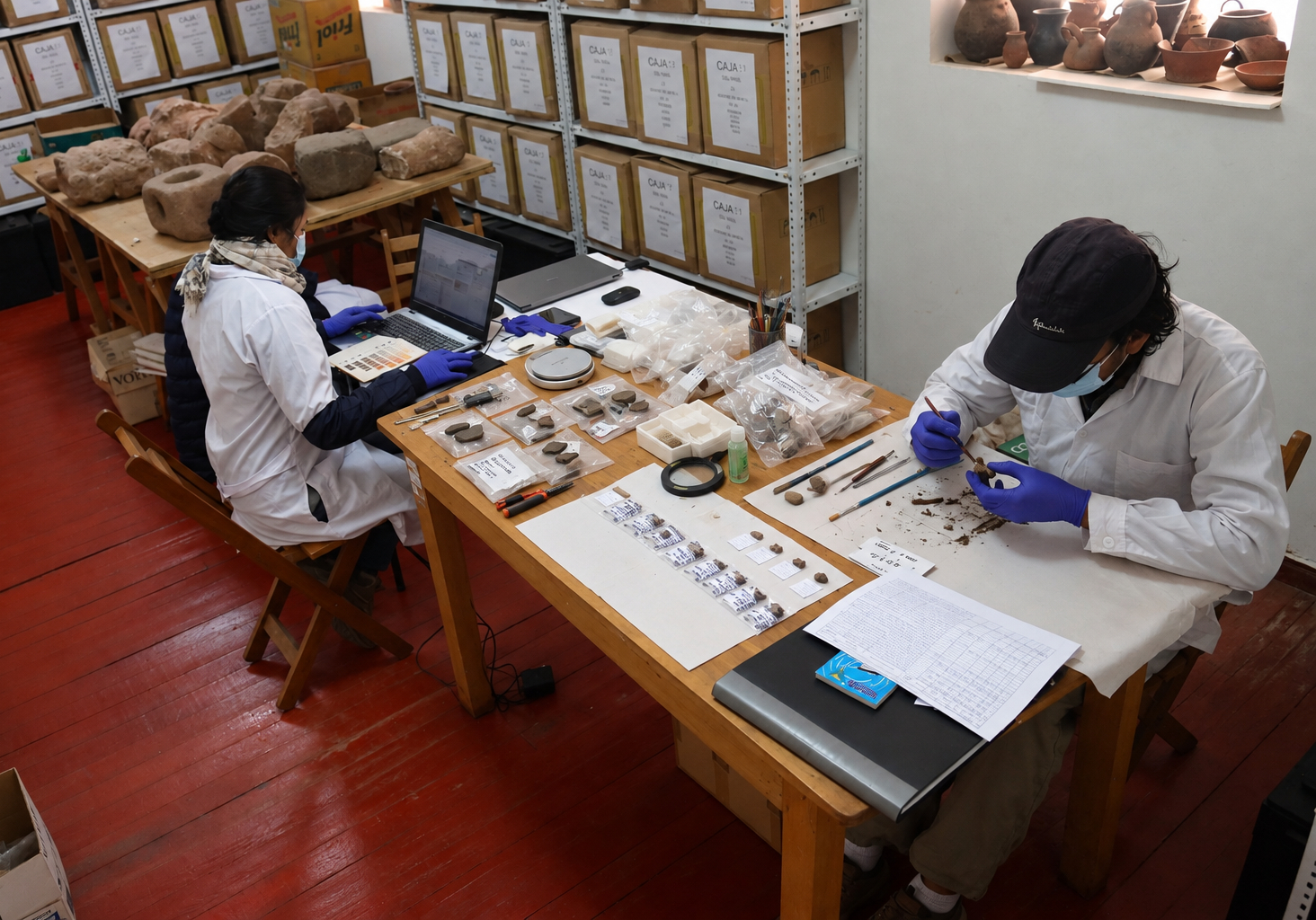
FOODPOWER works with archaeological collections housed in museums and archaeological repositories in the Puno region of southern Peru, including the Museo Lítico de Pucara and the Museo de Sitio de Sillustani. These collections preserve archaeological materials recovered from sites spanning different periods and contexts across the region and provide the foundation for selecting materials for laboratory research.
Working with curated museum collections allows FOODPOWER to bring together materials from different archaeological sites and periods, creating opportunities to investigate changing foodways, diet, and relationships between people, animals, plants, and food across the ancient Andes.
03 · SAMPLING
Selecting and documenting materials for laboratory research
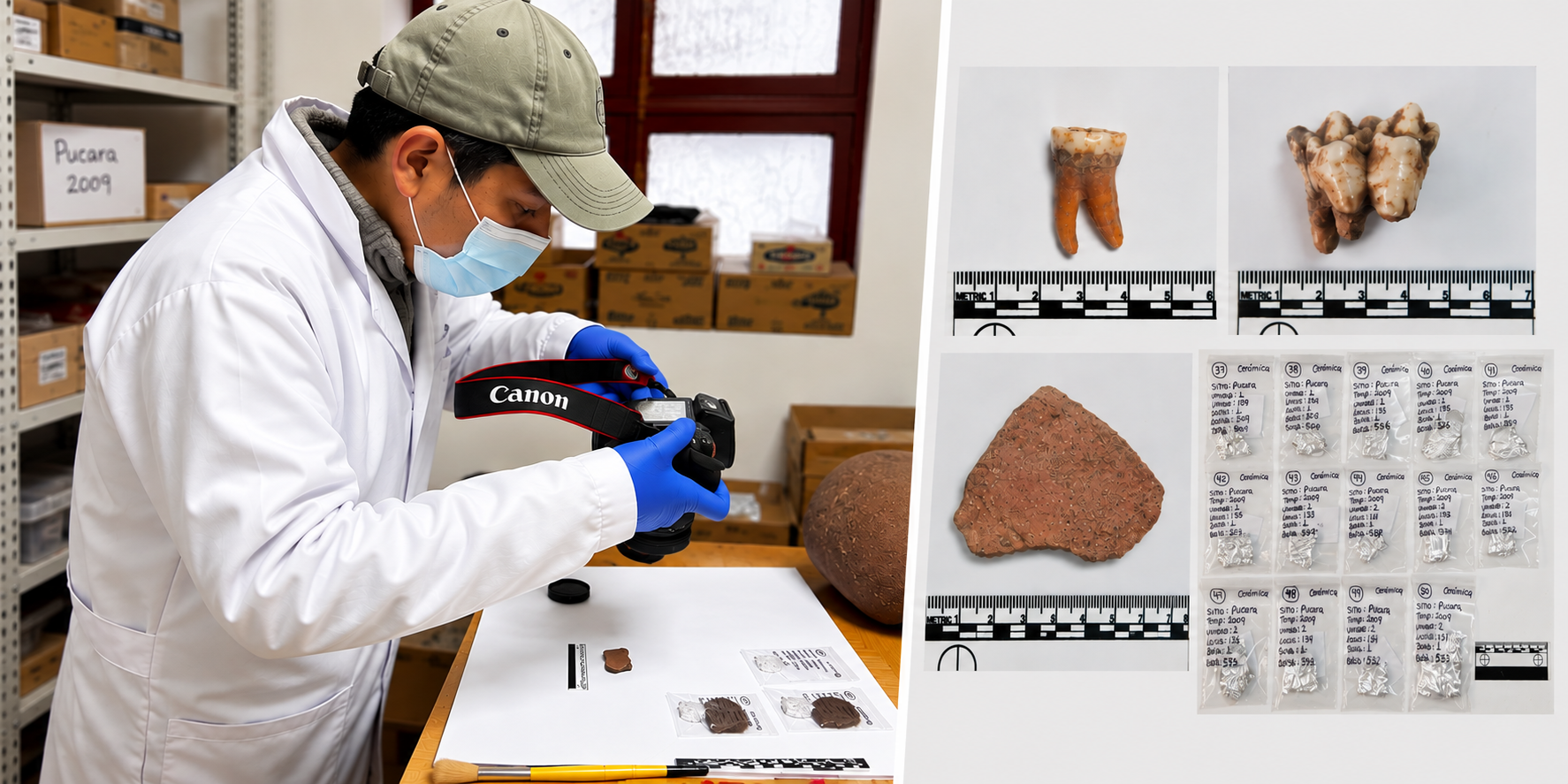
Sampling is a critical stage in the FOODPOWER research process. A total of 350 archaeological samples were selected from collections associated with seven archaeological sites in Peru, providing a diverse body of materials for laboratory research.
The selected materials include 235 ceramic fragments, 56 human remains, 43 animal remains, and 16 botanical samples. Together, these materials represent different archaeological contexts and provide complementary evidence for investigating foodways, diet, and changing relationships between people, animals, plants, and food.
Samples were selected according to their archaeological context, preservation, research potential, and suitability for the project’s analytical approaches. Detailed documentation accompanies each sample, including photographs, measurements, contextual information, and sample records, maintaining the connection between the archaeological collections and the laboratory research.
04 · RESEARCH AUTHORIZATIONS
From museum collections to laboratory research
FOODPOWER is conducted under the authorization of the Peruvian Ministry of Culture. The project first received authorization as a research project on museum collections and museographic holdings (RD No. 037-2026-DGM-VMPCIC/MC), allowing the systematic examination and selection of archaeological materials housed at the Museo Lítico de Pukara and the Sillustani Archaeological Complex repository. The authorization covered the selection of 350 archaeological samples for scientific research.
A subsequent Vice-Ministerial Resolution (RV No. 0285-2026-VMPCIC/MC) authorized the export of these 350 samples for specialized scientific analyses. This authorization allows the samples to be studied at BioArCh, University of York, as well as at collaborating laboratories in the United Kingdom, Finland, and the United States, according to the analytical requirements of the project.
Together, these authorizations establish the institutional framework that connects Peruvian archaeological collections with the laboratory research undertaken by FOODPOWER.
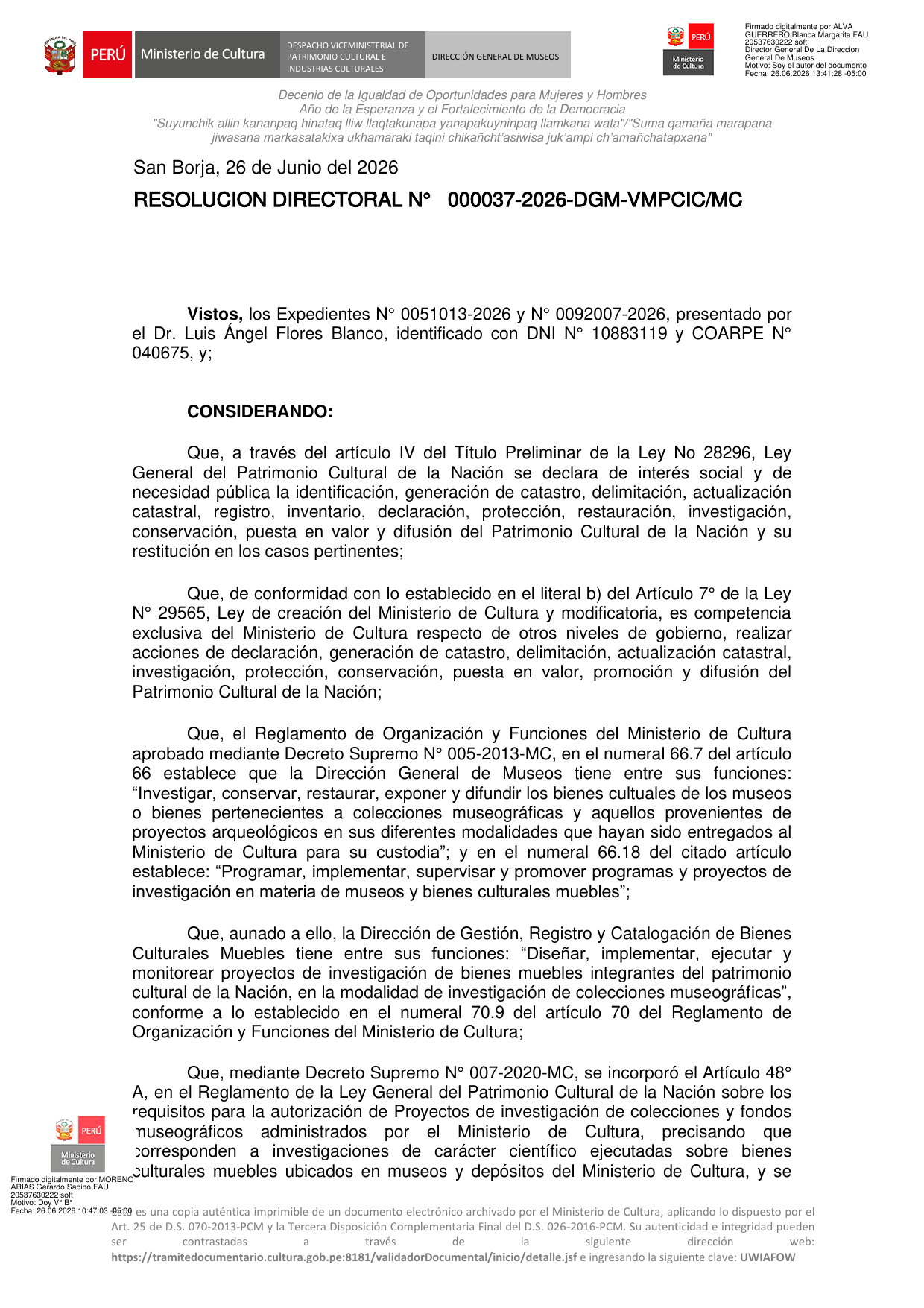
Authorization for museum collections research · 2026
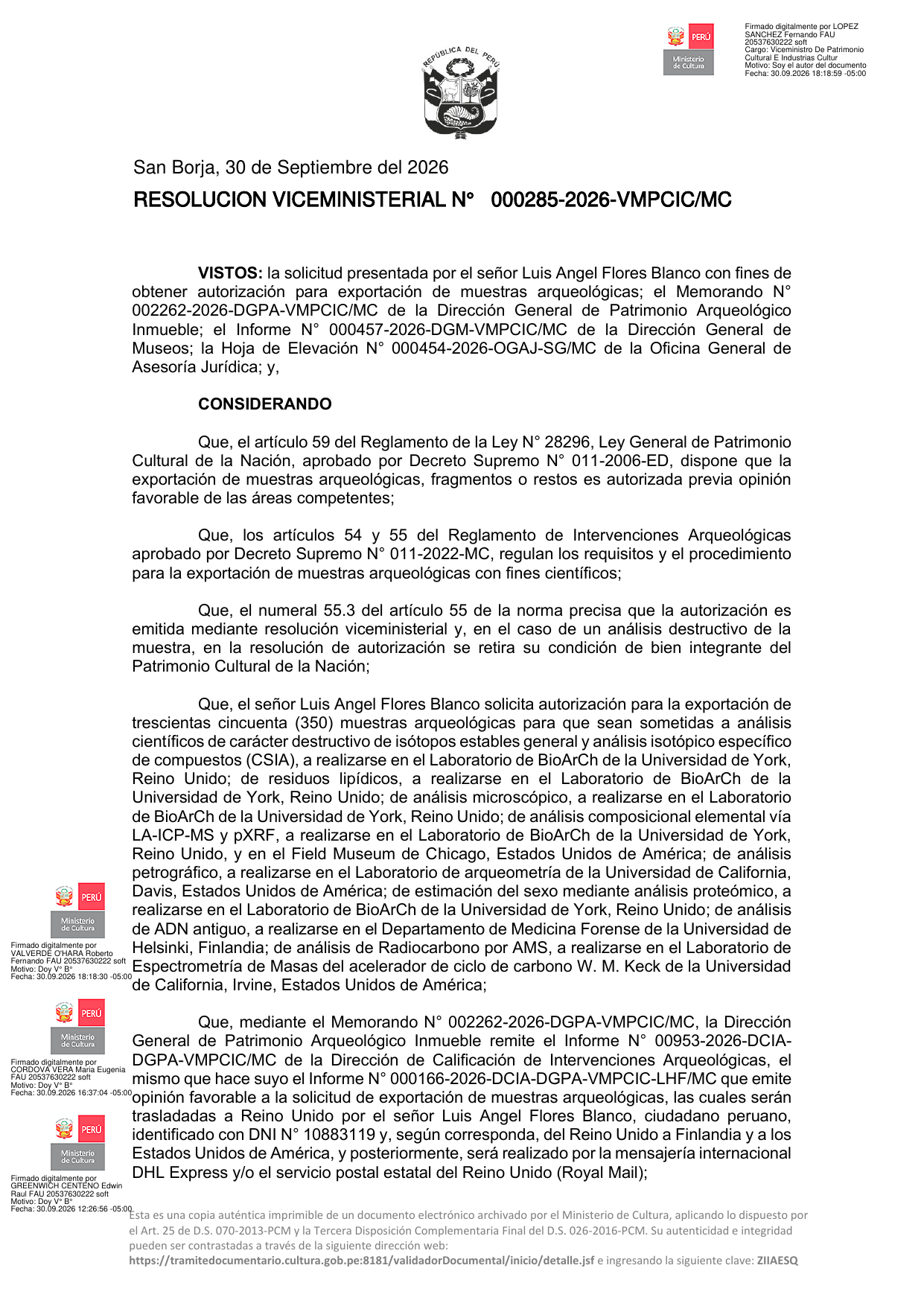
Authorization for archaeological sample export · 2026
THE FOODPOWER APPROACH
From archaeological materials to evidence about food, society, and power.
FOODPOWER connects archaeological fieldwork and collections research with laboratory analysis to investigate how foodways changed and how access to food became connected to social differentiation and political power in the ancient Andes.